Following the Child by finding the Right guide for your environment

A Montessori Perspective

One of the first lessons we learn in Montessori education is to “Follow the Child.” It sounds simple, yet it requires extraordinary discipline. Freedom, as Maria Montessori reminds us in The Absorbent Mind, is never the absence of structure, but the presence of understanding: 

 “To let the child do as he likes when he has not yet developed any powers of control, is to betray the idea of freedom.”  Maria Montessori  –  The Absorbent Mind, p. 204.

This principle lies at the heart of our practice, offering a surprising truth for another essential aspect of school life:  how to find the correct guide to join your environment?  This is not merely a process of selection; but an active process of identifying your school’s needs, through understanding, reflection and alignment.

At MSP, we believe the same principle should guide recruitment. Finding the right educator or leader for a Montessori school is not just about filling a vacancy — it is about determining the school’s needs, understanding its culture, and aligning those needs with an educator’s authentic practice. Recruitment, like education, becomes an act of alignment and respect.

It requires the same patience and insight that we apply in the classroom; because, as always, when the adults are aligned, the Child flourishes.

A Moment Every School Leader Knows

Many school heads and founders can recall a time when a new guide, though qualified on paper, disrupted the calm of a well-prepared environment.  “The lessons were given; the materials were in order — but something in the tone, the rhythm, or the presence felt off”.

One Head of School once described their experience, when appointing a new guide, who was a great fit this way: 

“The classroom looked the same, but the atmosphere had changed. The children were settled. The assistant was relaxed. It wasn’t just about skill — it was about energy.”

She later reflected, “I had finally hired someone who could not only teach Montessori, but someone who could be Montessori. They understood the philosophy”


Needs for the Child

The foundation for choosing the right Guide In the Montessori classroom, are the needs of the Child and the school. These are the cornerstone of practice. The guide watches before acting, interprets before intervening, and prepares the environment before teaching.

Finding the right guide begins the same way; by ascertaining the needs of the school environment itself, through experienced and active listening, asking the correct questions:

  • What is the current rhythm of the community?
  • What qualities are needed at this stage of the school’s growth
    • calmness, 
    • renewal, or 
    • Inspiration?
  • What type of guide will bring balance to the team and harmony to the environment?


Just as each Child’s development is unique, each school has its own stage of growth. 

Recognizing that stage; and selecting a guide who complements it; ensures continuity, stability, and trust. 

Understanding needs, not urgency, becomes the foundation of wise hiring.

Alignment Over Urgency


The person in charge of hiring the new guide, often feels pressured to move quickly when a guide leaves or a new class is opening. Parents are waiting, classrooms must run, and the calendar feels unforgiving.  But Maria Montessori taught us that growth cannot be rushed; not for the Child, and not for the adults who guide them.

Taking time to align a school’s needs with a guide’s philosophy and temperament is not inefficiency; it is leadership in its truest form. Finding the right guide is about following both the school and the educator; understanding each one’s rhythm and readiness.

A misaligned hire can unsettle the peace of the environment and require months to restore balance. In contrast, a well-matched guide brings quiet strength, steadiness, and harmony.

When this alignment is achieved, everyone, the children, the families, and the staff, feels it immediately.

The Prepared Environment for Adults

Just as we prepare the classroom for the child, we must prepare the environment for the adults who enter it. 

This means: 

  • clarity of expectations, 
  • transparency of values, and a 
  • culture rooted in trust.
     

When schools prepare this kind of environment; and when they take the time to observe rather than rush; the right guides find their way there.

The Brown Stair Cards

A Practice That Serves the Child
 

Finding the right guide is not a recruitment process; it is a pedagogical one.

It calls for the same principles we practice every day:

  • Observation — Listening deeply to all relevant members of the school and community, before deciding.
  • Preparation — Creating the right conditions for clarity and connection.
  • Guidance — Supporting the process without imposition or control.


When schools follow these principles, the result is not just a new hire; it is a continuation of Montessori practice itself.  Because in the end, every decision we make about adults in our environment must serve one purpose only: to protect the Child’s peace, independence, and potential.

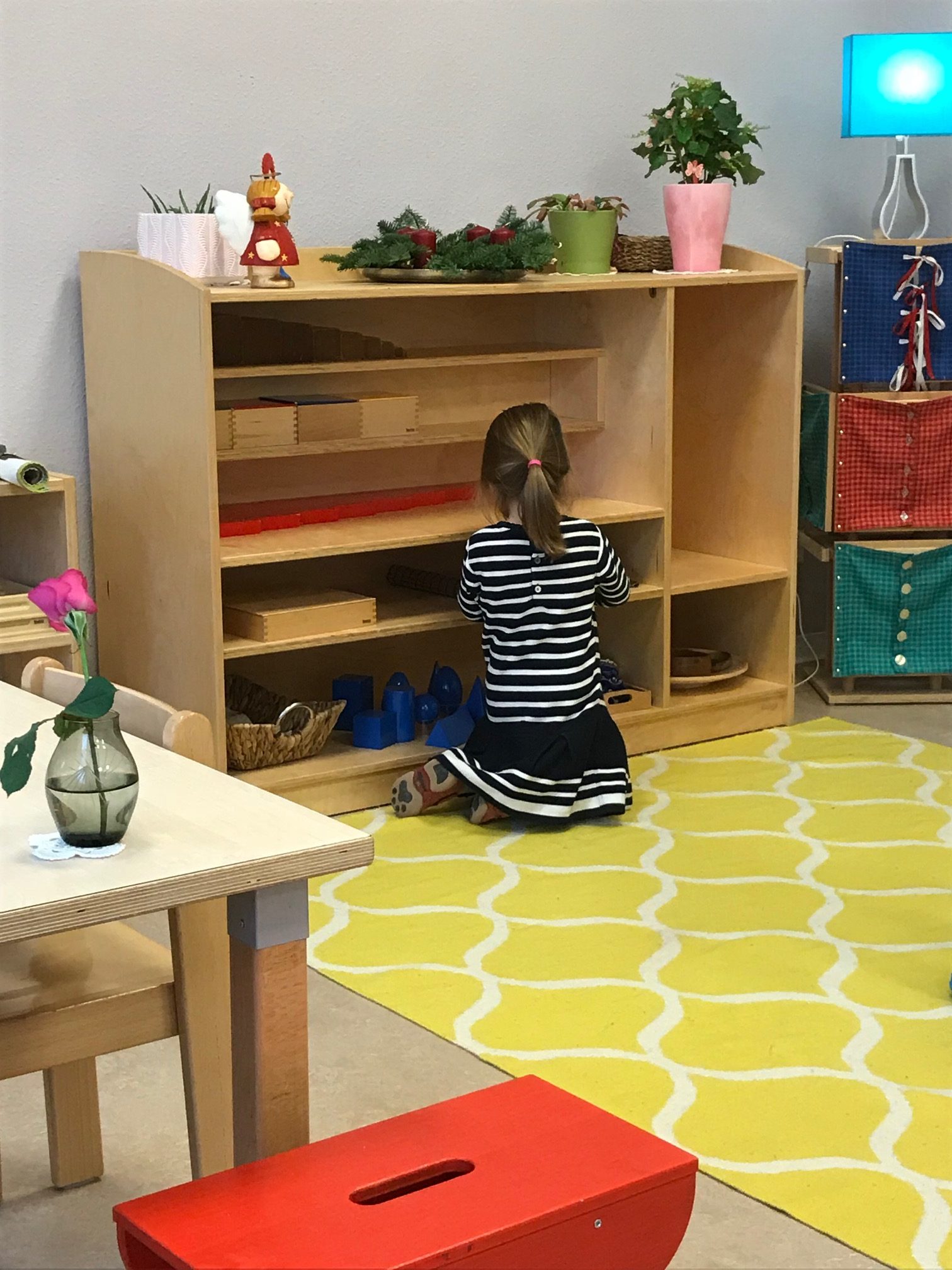
A Montessori child deciding which activity to select from the mathematics activity shelves.

Reflection & an Invitation

Perhaps the next time we find ourselves searching for a new guide or leader, we do not begin with the question, “Who should we hire?” but rather, “What does our environment need?”

The Montessori approach has always been about observation before action, patience before intervention, and alignment before movement.  When we apply those same truths to welcome new adults into our community; the outcome is harmony.  The Child feels it. The community feels it. The school grows in integrity and peace.  We all grow and flourish in peace and harmony.

We have walked alongside many schools in this reflective process; listening, observing, and helping them find guides and leaders who truly belong.  If your school is preparing for its next chapter and you would like to explore how to find the right guide for your environment, we would be delighted to begin that conversation with you.

In November, the global community will be celebrating the UNESCO “Universal Day of the Child”.  This started me thinking about how we continuously celebrate these “days”, but of what benefit can they be to the Child if we do not focus on how the Child develops day to day.  Does the Child get the opportunity to develop as their personality, nature or intelligence dictates?  What about the adult-man-child, if the infant-child is not allowed to show the way?

Dr. Maria Montessori believed that if we follow the child, they will show us the way.  This does not mean that we let the child do what he wants. It is simply an acknowledgment that the child has his or her own pattern that must be considered.  Recognize where the child is at in their developmental process, rather than impose our idea of what the child should learn now.

“All that we ourselves are has been made by the child, by the child we were in the first two years of our lives.” (Dr. Maria Montessori, The Absorbent Mind, p. 6)Follow the Child
This is an important point, and another reason that observation is so crucial in the Montessori curriculum. Since each child has their own developmental timetable, we can’t know where they are at if we are not constantly observing them.

Observation will influence the Guide as to what material to present to the Child and when.  This observation is the main area where Montessori differs from traditional education.  In a Montessori school, the Child does not follow a strict curriculum, where every child learns the same things every day.  In a classroom of 20, there could be 20 differing levels of work taking place and monitored by the Guide every day.  Why?  Because the Montessori Guide believes that the Child instinctively knows what (s)he needs to do.  The Child may struggle with an activity, attempting to master it.  Instinctively returning to it again and again;  until they have mastered it and can feel that inner “glow” of personal satisfaction in accomplishing a task well.  (Courtesy of Montessori for Everyone)

This is where Childrens House comes in.  We have top-class quality materials in stock, available for immediate use in your classroom.  In addition, should you need assistance or guidance with anything relating to the setting out your classroom, we offer a free service from Montessori specialists;  call Sharon (083)590-6706 or Justine (083)387-7432 for an appointment and they will assist you.

Pick your currency

Choose the currency of your choice and checkout online

Visit your country store

to our newsletter

Subscribe