If Maria Montessori were around today, how would she feel about the manner in which her materials are currently manufactured?
We have taken her philosophy to heart, ensuring that our products are fit for purpose and safe for the Child, as well as environmentally sustainable.
Using eco-friendly materials in today’s world is not a nice to have.
It is a non-negotiable.
Read our story below about the materials, and methods we use.
This is not a once-off for us. It is an ongoing quest to reduce our carbon footprint, by the optimisation and re-use of raw material, and components.
For us, recycling is the last resort.
First, we try to reduce the use of unneccesary material, packaging, and waste through the supply chain. We insist that all of our suppliers and partners carefully consider the packaging used when they pack and ship components to us.
Second, we innovatively re-use all excess material received from raw material suppliers, and partner factories.
The excess that can’t be used as packaging, is then finally recycled, weekly through accredited recycling companies.
Control Mat Printing
VXMat
Fabric Printing
Many of our activities and controls are printed on our pioneering VXMat fabric.
This silky material is made from a polyester twill that is washable, whilst maintaining colour fastness and brightness.
VXMat can be soft-ironed to remove creases and folds after washing.
We print exclusively in-house with eco-friendly inks to maintain strict quality control and sustainable labour practices.
Movable Mat Printing
Digital CMYK Printing
VXCard guillotining
VXCard
Digital Printing
Most of our Curriculum Support Materials are printed on a uniquely formulated synthetic card.
No lamination is required, because VXCard is non-tear, water and scratch resistant.
We print in-house digitally with eco-friendly inks, maintaining best industry practices.
Guillotining, collation and packaging is done by our own staff, to ensure that we meet our stringent quality standards
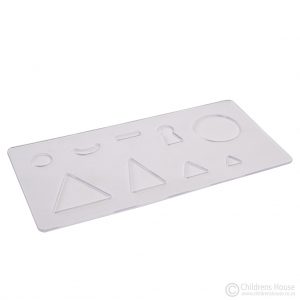
The stencils and display holders we use for our activity sets are manufactured from acrylic.
Laser cut, flame polished and bent with a CNC machine, the edges of our acrylic products are smooth and safe for regular use by the Child.
As part of the production process, excess scrap acrylic is cut into small chips, as “regrind”, for other injection moulded products. This is the most sustainable way to work with this quality plastic.
All of our acrylic raw material is locally sourced and fabricated by our local partners under our supervision. This ensures that responsible production, labour and recycling methods are used.
Polypropylene
Injection Moulding
Many of our activities are supplied with robust, washable and practical containers made from Polypropylene.
Where applicable, our Curriculum Support Materials are supplied in injection moulded containers that also dovetail as packaging. Thereby reducing the use or need for single use plastics like cellophane wrapping, cling wrap or bubble wrap.
We partner exclusively with a local injection moulded company that has been in the industry for more than 20 years and employs industry best practices in its production methods.
We believe that there is still a place for polypropylene containers, as they can re-used extensively in the Montessori environment.
They are affordable, hard wearing and easily recycled.
Bead Stairs in polypropylene containers
Adjective Exercises in Polypropylene containers
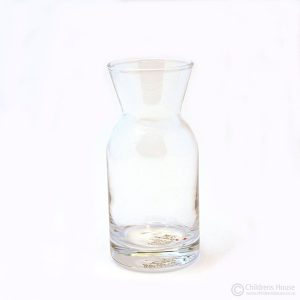
100ml Glass Carafe
Glassware
Glass Moulding
Glassware is a cornerstone of the Montessori practical life environment. We sell a number of glassware products tailored for the Child.
Whilst we don’t manufacture glassware ourselves, we do purchase these items from several factories locally and abroad. We adopt a strict quality check for all of our glassware.
Unfortunately, due to the nature of glass, a high percentage of product is damaged through the supply chain process. We repackage all of our glassware products using re-used bubble wrap. This has proven to be the safest way to transport.
We continue to find better ways to re-package glassware. We are currently working with innovative packaging suppliers to find biodegradable solutions.
100ml Small Glass
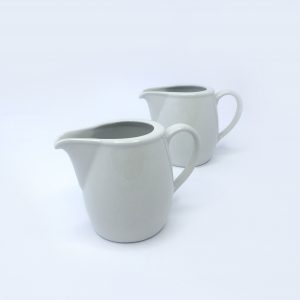
Ceramic Jugs
Ceramics
Ceramic Manufacture
In addition to glassware, we supply a number of ceramic jugs, dishes, bowls, spoons and kitchenware.
The vast majority of our ceramics are supplied by a partner factory here in South Africa that has been producing quality products for more than 50 years.
Due to the fragility of ceramic ware, we re-package products using re-used bubble wrap.
We continue to search for more eco-friendly ways to package ceramics.
Ramekin
Wood
Woodworking
The extensive use of natural wooden products is one of the predominant features of the Montessori Method of teaching.
We use several types of wood, sourced from renewable sources, in the production of our Montessori Materials.
Solid beechwood for cylinder blocks, pink towers, dressing frames and brown stairs.
Birch ply for trays, holders and animal/botany puzzles.
MDF for puzzle maps
Pineply for boxes and containers
We ensure that the coatings and inks used are not only eco-friendly, but also non-toxic.
Our wooden products are manufactured by responsible partner factories both locally and abroad, ensuring that fair labour practices are adopted.
Growth Process of a Butterfly
Pink Tower and Stand
Cardboard & Plastic
Packaging
We have found innovative ways to work with other factories in our community. Every week, we collect cartons, packing fill and other used packaging inserts from neighbouring companies.
Instead of these items being sent to recycling, we re-use them to repack small items and orders. Not only does it save us money, it extends the life of a packaging material.
When you receive your order, you may see another brand or logo on the box, irrelevant to Childrens House. Don’t be alarmed. It’s what’s inside that counts!
Pick your currency
Choose the currency of your choice and checkout online